
This industry loves confusing acronyms. We translate them. Whether you are trying to figure out what a DSP does or why "cookies" are going away, this section breaks down the infrastructure into simple, clear definitions you can actually use in a conversation.
Ad Exchange
The digital marketplace that acts as the intermediary clearinghouse, connecting buyers (DSPs) and sellers (SSPs) to execute real-time media transactions.
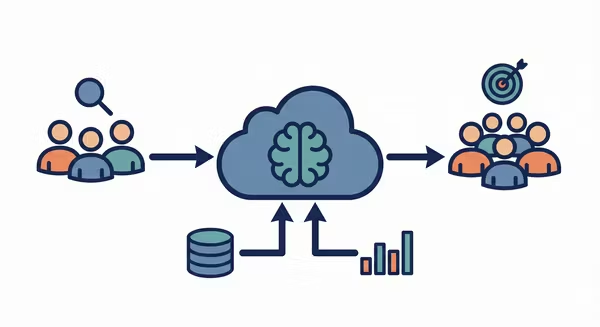
Lookalike Audience (LAL)
A programmatic targeting segment derived from algorithmic modeling that identifies new users resembling an advertiser's existing high-value customers.
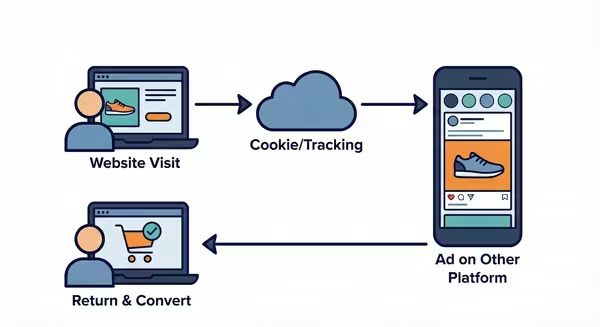
Retargeting
A programmatic strategy focused on re-engaging users who have previously interacted with your brand’s digital properties.
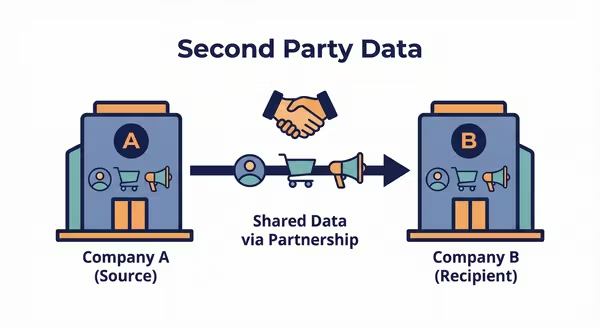
Second Party Data
Aggregated audience information collected by entities without a direct relationship to the user, typically purchased to scale reach beyond owned channels.
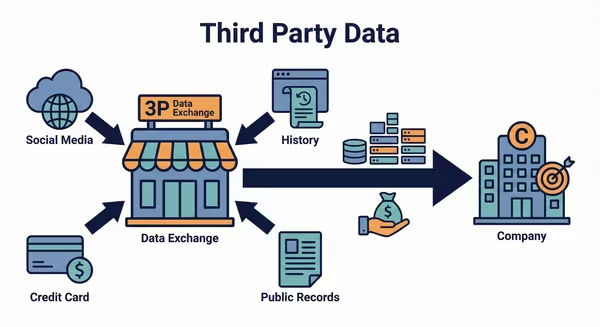
Third Party Data
Aggregated audience information collected by entities without a direct relationship to the user, typically purchased to scale reach beyond owned channels.

First Party Data
Proprietary information collected directly from audience interactions across owned channels, serving as the most valuable asset for addressability.
RTB (Real-Time Bidding)
The automated auction protocol that determines which ad loads in the 200 milliseconds before a webpage renders.
DMP (Data Management Platform)
The legacy engine for aggregating anonymous audience data and building targeting segments.
Pixel
The invisible code snippet that bridges the gap between ad spend and revenue verification.
SSP (Supply-Side-Platform)
The technology platform publishers use to manage, sell, and optimize their advertising inventory yield.
DSP (Demand-Side-Platform)
The centralized software interface used by advertisers to purchase digital advertising inventory programmatically.
Viewability
A quality assurance metric confirming that an ad rendered on screen and had the opportunity to be seen by a user.
Attribution
The process of identifying which marketing touchpoints contributed to a specific user action or conversion.