Boardroom Definition
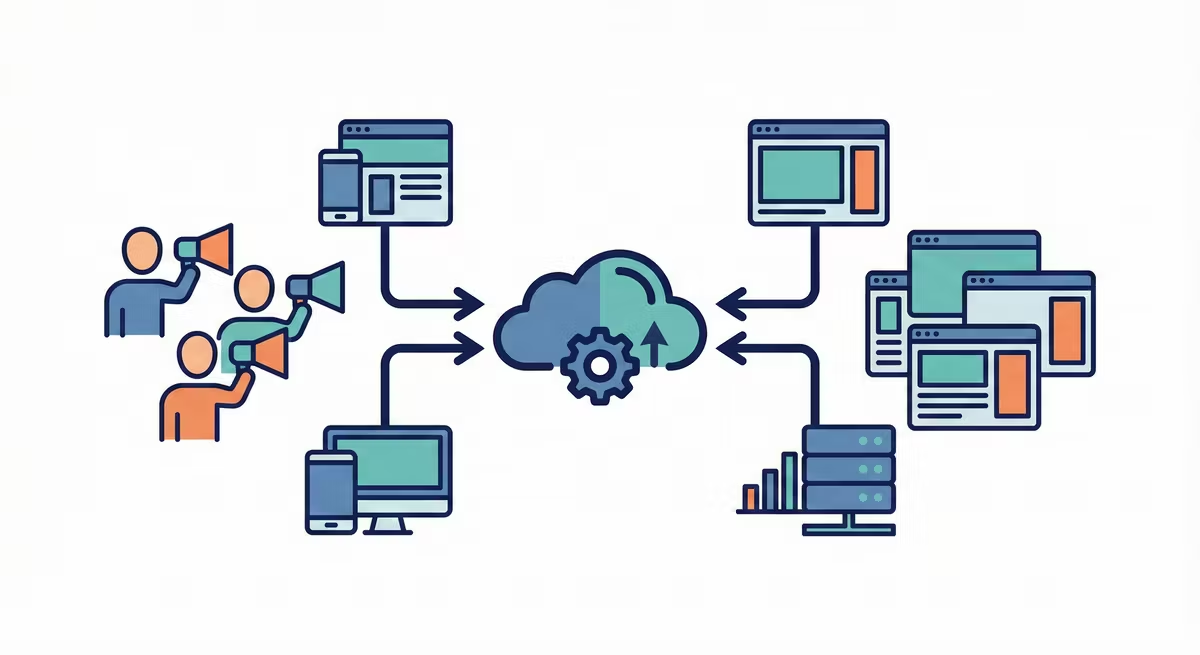
An Ad Exchange is a technology platform that facilitates the automated buying and selling of media advertising inventory from multiple ad networks. Functioning like a stock market for digital ads , it is the central infrastructure where the supply side (publishers selling space via SSPs) meets the demand side (advertisers buying space via DSPs). The exchange executes the auction protocol, determining the final price and serving the winning ad in milliseconds.
The Ad Exchange facilitates the Clearing Price determination. While the bid happens in the DSP, the Exchange applies the auction logic (First-Price or Second-Price).
The Auction Logic (Simplified): In a Second-Price Auction (historically common): Clearing Price = Second Highest Bid + $0.01
In a First-Price Auction (current standard): Clearing Price = Winning Bid
Take Rate Calculation: The exchange generates revenue by retaining a percentage of the media spend passing through it. Exchange Revenue = Total Media Spend * Take Rate % (Note: High take rates reduce the "Working Media" dollars that actually reach the publisher.)
The Real Scoop
In 2026, the term "Ad Exchange" is becoming less visible as the lines blur between SSPs and Exchanges. Originally, they were distinct: the SSP aggregated the sites, and the Exchange ran the auction. Today, most major SSPs (like Magnite or PubMatic) function as exchanges.
The truth is not all exchanges are created equal. "Open Exchanges" are considered the Wild West with massive scale, variable quality, and high fraud risk. "Private Exchanges" or Private Marketplaces (PMP) are invite-only environments where premium publishers sell their inventory to select buyers at a pre-negotiated floor price. Smart strategy often involves bypassing the Open Exchange entirely to deal directly with publishers via Programmatic Direct or PMP deals to ensure better data fidelity and lower fees.
Watch Outs
- The "Unknown" Reseller: Exchanges often allow "resellers" to list inventory they don't own. Always check the ads.txt file of a publisher to verify which exchanges are actually authorized to sell their inventory. Unauthorized resellers are often selling spoofed or non-existent slots.
- Bid Shading: In First-Price auctions, if you bid $10 and the next highest bid is $2, you pay $10. To prevent overpaying, ensure your DSP utilizes "Bid Shading" algorithms that predict the lowest price required to win the auction on that specific exchange.
- Latency: The more exchanges a publisher connects to, the slower their page loads. "Header Bidding" wrappers query multiple exchanges simultaneously. If an exchange is slow to respond, it may time out and miss the opportunity to bid, regardless of the price offered.