Boardroom Definition
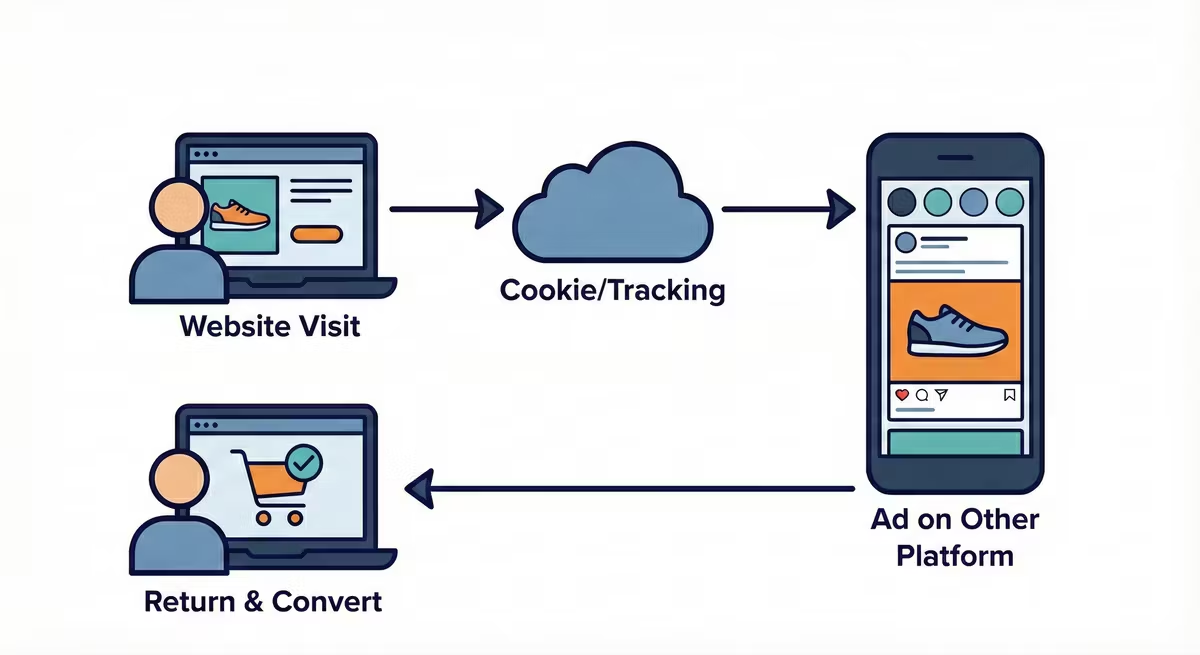
Retargeting (often used interchangeably with "Remarketing") is a digital advertising tactic that identifies users who have visited a website or interacted with an app but did not complete a conversion action. By utilizing tracking pixels or device identifiers, advertisers can serve specific ad creative to these high-intent users as they browse other parts of the web or social media. It is primarily used to drive lower-funnel conversions by keeping the brand top-of-mind.
Retargeting efficiency is heavily influenced by the Frequency variable. The relationship between unique reach and total impressions determines the intensity of the retargeting pool.
The Intensity Formula:
Total Impressions / Unique Users = Average Frequency
The Decay Curve:
Performance in retargeting follows a sharp logarithmic decay. A user is mathematically most likely to convert within the first 24–48 hours of site abandonment.
$P(Conversion) \approx \frac{1}{Time Since Visit}$
Therefore, bid strategies are often weighted to bid highest immediately after the site visit and decrease aggressively over time.
The Real Scoop
In the golden age of the third-party cookie, retargeting was the "easy button" for ROAS. You placed a pixel, and the ad followed the user everywhere. In 2026, the game has changed. With browser restrictions and Apple’s ATT, "Pixel-based" retargeting has suffered massive signal loss.
The modern "Insider" approach relies on Server-to-Server (CAPI) connections and First Party Data lists. Instead of waiting for a cookie to fire, brands now upload hashed email lists of "Cart Abandoners" directly to platforms like Meta and Google to re-engage them. Additionally, Dynamic Creative Optimization (DCO) is the engine behind effective retargeting—automatically assembling an ad that shows the exact red sneakers the user viewed, rather than a generic brand banner.
Watch Outs
- The "Stalker" Effect: Without strict Frequency Capping (e.g., 3 impressions per day), retargeting can damage brand sentiment. Bombarding a user who has already decided not to buy creates annoyance, not conversion.
- Attribution Cannibalization: Retargeting vendors often claim credit for conversions that would have happened organically. If a user visits your site, leaves to check the weather, sees your ad, and then returns to buy, the retargeting vendor claims the sale even if the user was returning anyway.
- Post-Purchase Waste: Nothing wastes budget faster than retargeting a user for a product they just bought. Ensure your "suppression lists" (recent purchasers) are updated in real-time to avoid this.