Boardroom Definition
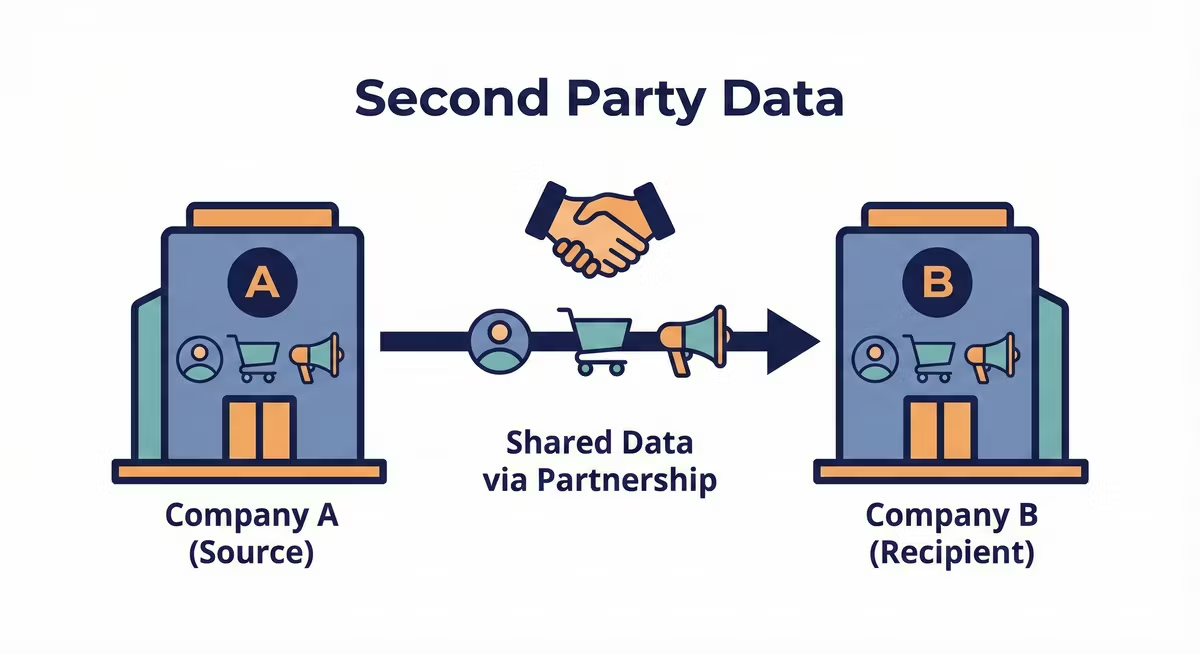
Second Party Data is First Party Data that is shared directly between two consenting partners, bypassing open market aggregators. It represents a strategic exchange where one entity (e.g., an airline) grants another entity (e.g., a hotel chain) access to its customer segments for mutual benefit. This data is unique because it combines the precision and compliance of First Party Data with the ability to reach audiences outside of an advertiser's own ecosystem.
Advanced Math and Science Application
The value of a Second Party Data partnership is mathematically determined by the Overlap Analysis or Intersection Rate.
The Overlap Formula:
$$Intersection Rate = (\frac{Matched Unique IDs}{Total Targetable IDs}) \times 100$$
Before executing a media buy, partners typically run this calculation within a neutral environment.
- Low Overlap (5-10%): Ideal for Prospecting (finding net-new customers).
- High Overlap (60%+): Ideal for Loyalty/Upsell (targeting shared customers).
The Real Scoop
In the post-cookie era (2026), Second Party Data has fueled the explosive rise of Retail Media Networks (RMNs). When you buy ads on a retailer's site (like Amazon, Walmart, or Marriott), you are essentially renting their Second Party Data.
The "Insider" reality is that 2P data is widely considered the "Goldilocks" solution for modern targeting. It lacks the scale and cheapness of Third Party Data, but it offers the verified accuracy of First Party Data. Unlike the open exchange, where data provenance is murky, with 2P data, you know exactly where the data came from (e.g., "Verified purchasers of running shoes from Retailer X"). This transparency usually commands a significant CPM premium.
Watch Outs
- The Clean Room Requirement: You cannot simply email a CSV file of customers to a partner. Modern privacy laws (GDPR/CCPA) require the use of Data Clean Rooms—secure software environments where two parties can match data without ever seeing each other’s raw PII (Personally Identifiable Information).
- Scalability Issues: Unlike Third Party segments which can be bought instantly, 2P relationships require business development, legal contracts, and technical integration. It is a slow-moving strategy.
- Competitor Leakage: Be wary of broad 2P agreements where a retailer might also be selling the same "Shopper Data" to your direct competitors.