Boardroom Definition
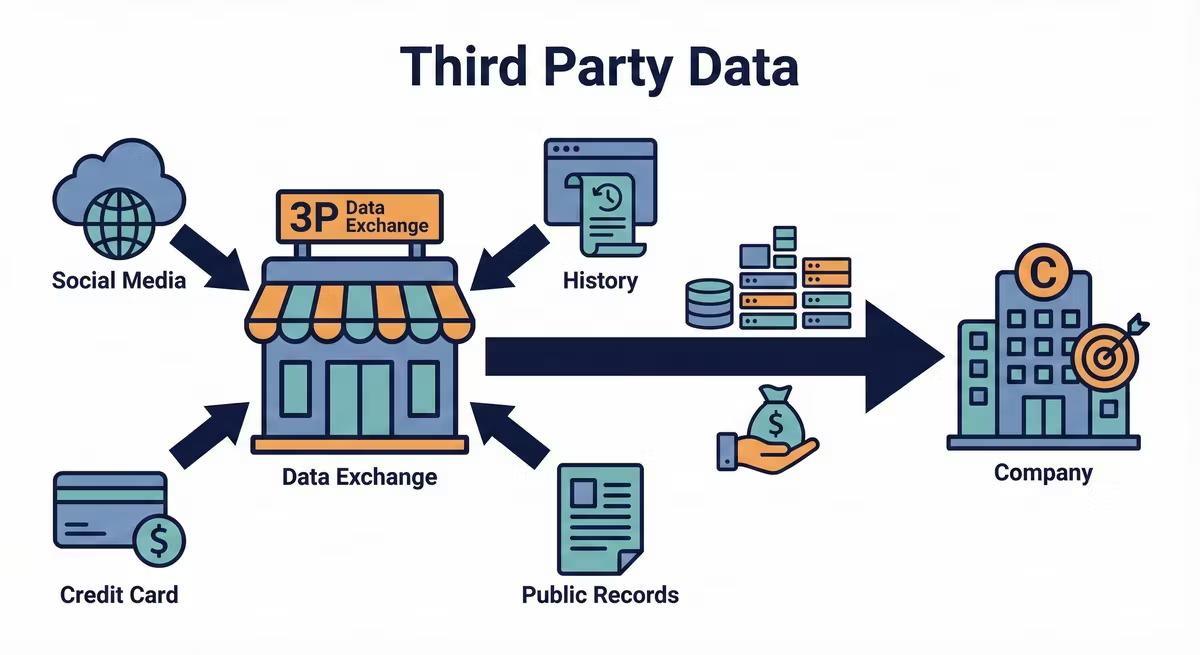
Third Party Data refers to data sets collected, aggregated, and sold by independent data providers (e.g., Oracle, Acxiom, Experian) who do not have a direct relationship with the consumer. This data is typically categorized by behavior, interest, or demographics and is made available via Data Management Platforms (DMPs) or DSP marketplaces. It is primarily used by advertisers to reach new audiences (prospecting) by overlaying targeting attributes onto media inventory.
In many DSPs, Third Party Data is billed as a flat fee (e.g., $1.50 CPM) added to every impression served. This creates an efficiency threshold:
If the 3P data does not improve the Conversion Rate (CVR) enough to offset the incremental $1.50 cost, the Cost Per Acquisition (CPA) will increase, making the campaign less efficient than a run-of-network buy.
The Real Scoop
For the last decade, Third Party Data was the "easy button" for digital targeting. However, in the post-2025 landscape, its efficacy is severely challenged. The deprecation of the third-party cookie by major browsers and the introduction of Apple’s ATT (App Tracking Transparency) have broken the daisy-chain of data collection that 3P vendors relied on.
The "Insider" reality is that much of the remaining Third Party Data is probabilistic (best-guess modeling) rather than deterministic (verified fact). A segment labeled "Auto Intenders" often contains users who simply read one car blog post three months ago. While it remains useful for broad reach and filling the top of the funnel, it lacks the precision of First Party Data. Smart planners now treat 3P data as a directional signal rather than a guaranteed attribute.
Watch Outs
- The Recency Illusion: Third Party segments are often "static," meaning a user added to a "Home Buyer" segment may remain there for months after they have already closed on a house. Always check the "Time-to-Live" or recency settings of a segment before buying.
- Data Tax: Because 3P data fees are often hidden or separated in billing, they can silently erode working media dollars. A $2.00 CPM data fee on a $4.00 CPM display buy means 33% of your budget is going to data, not media.
- Regulatory Risk: Using 3P data that was not collected with compliant consent strings (GDPR/CCPA) can expose brands to legal liability, even if they didn't collect the data themselves.