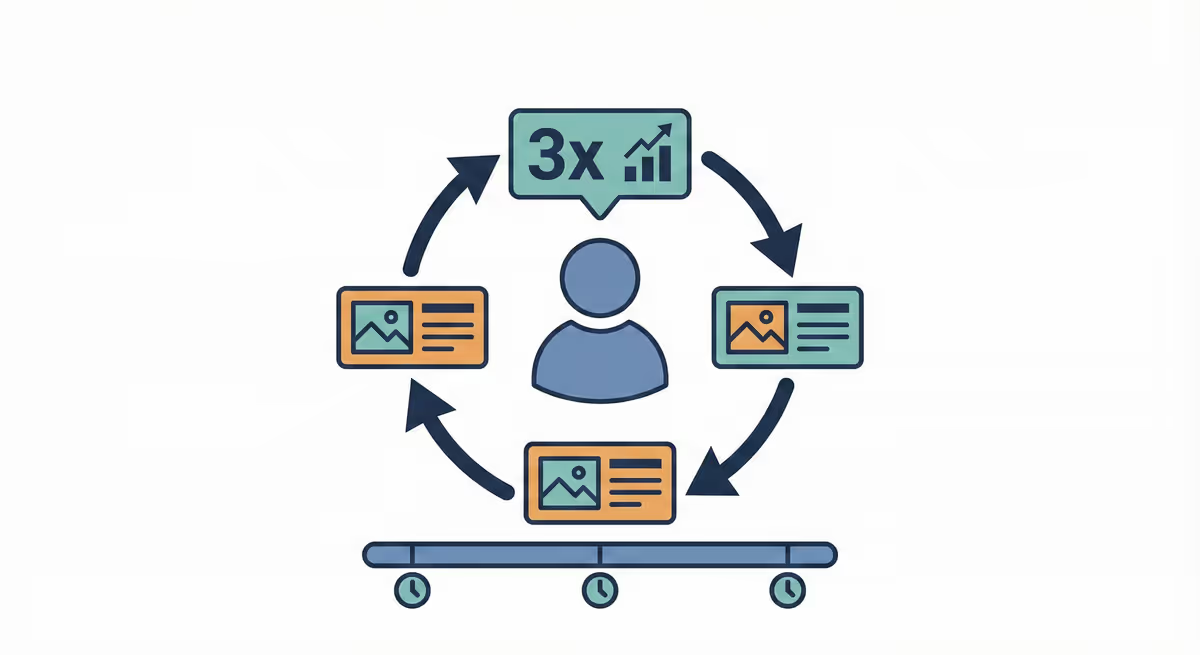
Boardroom Definition
Frequency is a quantitative measure of advertising intensity. It represents the depth of exposure for a campaign, answering the question, "How many times did our target audience see this ad?" It is the counterpart to Reach (width). In media planning, frequency is critical for driving recall and changing consumer behavior, as a single exposure is rarely sufficient to trigger a complex purchase decision.
Frequency is rarely measured directly; it is a derived metric calculated from Impressions and Reach.
The Formula:
$$Average Frequency = \frac{Total Impressions}{Unique Reach}$$
The Effective Frequency Curve:
Media theory historically relied on the "Rule of Seven" (a user needs to see an ad 7 times to act). In modern digital environments, the response curve is often modeled as Logistic Growth:
$$Impact = \frac{1}{1 + e^{-k(Frequency - Midpoint)}}$$
This formula suggests that impact grows slowly at first (1-2 views), accelerates (3-5 views), and then plateaus or declines into negative sentiment (10+ views), known as the point of Diminishing Returns.
The Real Scoop
In 2026, Frequency is the silent killer of budget efficiency.
The "Insider" reality is that most advertisers over-serve their ads to the same small pool of users because it is cheaper than finding new ones. This leads to Ad Fatigue. When frequency gets too high (e.g., 15x+ in a week), Click-Through Rates (CTR) plummet and Cost Per Acquisition (CPA) skyrockets because the user has already mentally tuned out the message.
Smart planners strictly differentiate between Platform Frequency (frequency on just Facebook) and Cross-Channel Frequency (frequency across TV, Social, and Display). The latter is notoriously difficult to control without advanced identity solutions, often resulting in users seeing the same Connected TV spot 40 times in a row, a phenomenon known as the "CTV Frequency Problem."
Watch Outs
- The "Average" Trap: A reported "Average Frequency of 3" is misleading. It often means 80% of people saw it once, and 20% saw it 11 times. Always ask for a Frequency Distribution report (e.g., "How many people saw it exactly 1 time, 2 times, etc.?").
- Creative Wear-Out: High frequency requires high creative variety. If you only have one banner size and you serve it 10 times, performance dies. If you have 5 creative variations, you can sustain a higher frequency without annoyance.
- Retargeting Overkill: Retargeting campaigns naturally have high frequency. Without strict caps, you risk damaging brand equity by "stalking" users across the web.