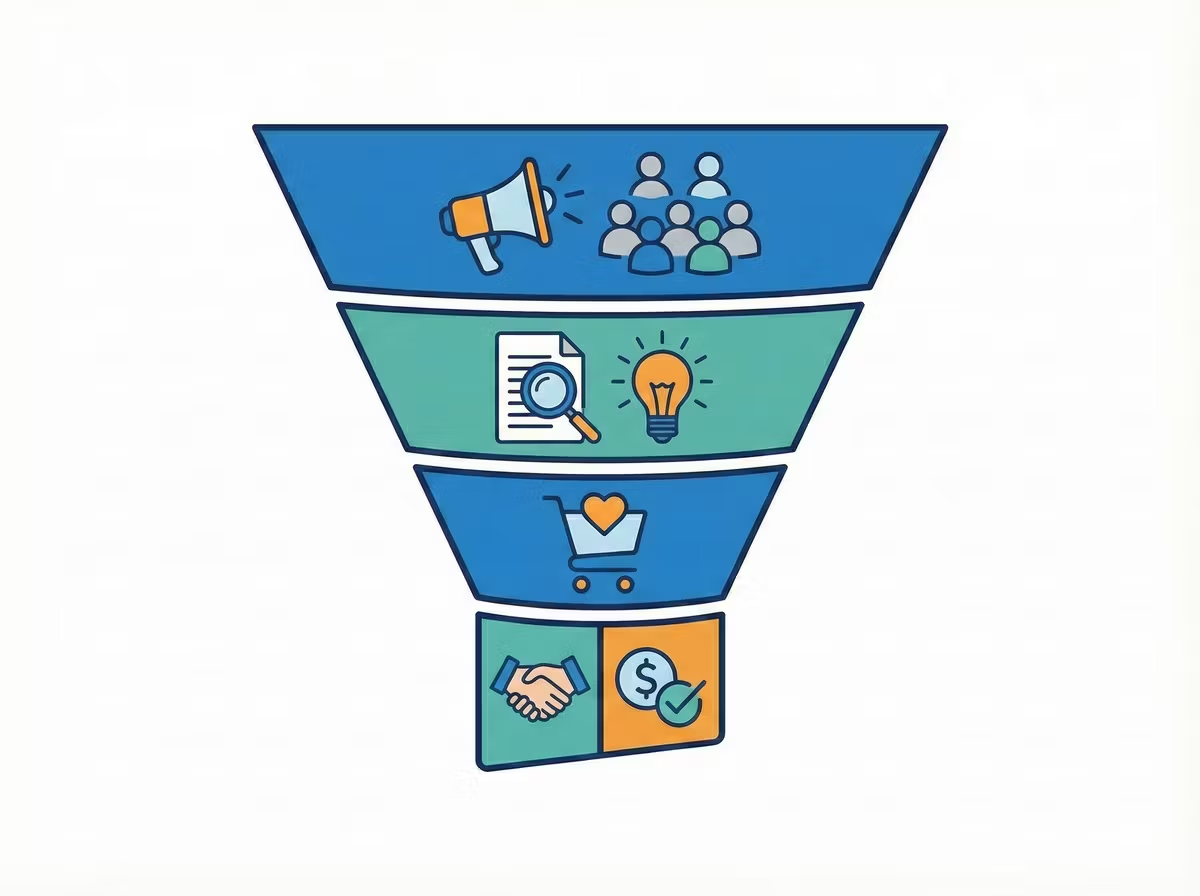
Boardroom Definition
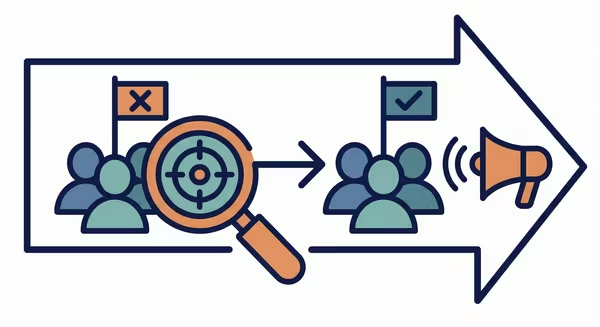
The marketing funnel is a structural heuristic used to map the customer journey, typically segmented into four primary stages: Awareness, Consideration, Acquisition (or purchase) and Retention. In media strategy, it serves as an allocation model, guiding the distribution of budget and creative messaging to move users from a broad state of discovery to a narrow state of purchase intent.
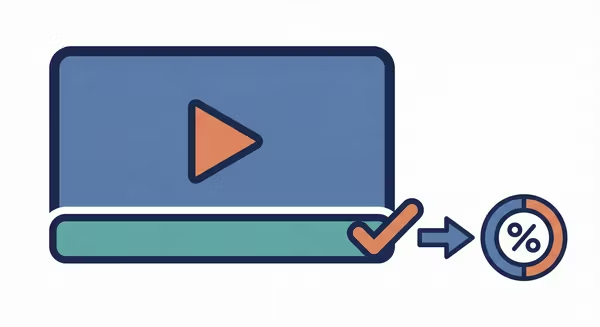
The health of a funnel is measured by the Stage Conversion Rate, which calculates the percentage of users who progress from one defined stage to the next.
Stage Conversion Rate = (Volume in Current Stage / Volume in Previous Stage) * 100
Media planners also utilize Blended CPA (Cost Per Acquisition) to understand the total investment required across all stages to generate a single sale, preventing the isolation of upper-funnel costs from the final return.
The Real Scoop
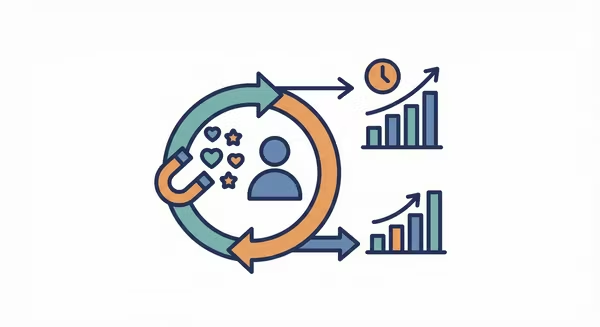
While the funnel remains the dominant mental model for budget allocation, the linear "AIDA" (Attention, Interest, Desire, Action) path is largely obsolete in modern digital behavior. In 2026, the journey is defined by the "Messy Middle"a complex loop of exploration and evaluation where users jump non-linearly between research and discovery. See Google's "Messy Middle" Insights report (2000).
Effective modern strategy treats the funnel not as a gravity-fed chute, but as a system of signals. Upper-funnel activity (Video/CTV) is not just for "awareness"; it seeds the retargeting pools that make lower-funnel (Search/Display) performance efficiency possible. Ignoring the interconnectedness of these stages usually leads to a collapse in new customer acquisition.
Watch Outs
- The Efficiency Trap: Over-optimizing for "Bottom of Funnel" (Conversion) metrics often yields high immediate ROAS but starves the brand of new prospects. This eventually increases Customer Acquisition Costs (CAC) as the retargeting pool shrinks.
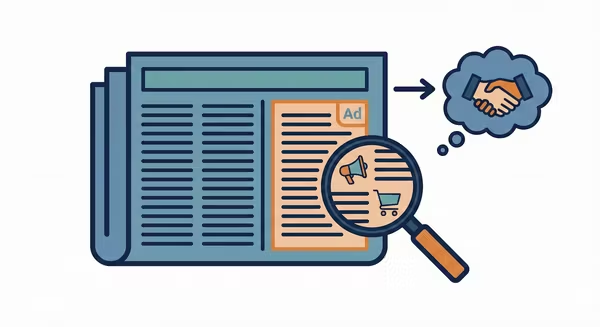
- Attribution Theft: Last-touch attribution models inevitably credit the funnel's bottom (e.g., Branded Search), ignoring the heavy lifting done by upper-funnel awareness drivers that created the demand initially.
- Creative Misalignment: Using "Buy Now" hard-sell messaging in the Awareness stage creates friction and lowers click-through rates, as the user has not yet established trust or need.