Boardroom Definition
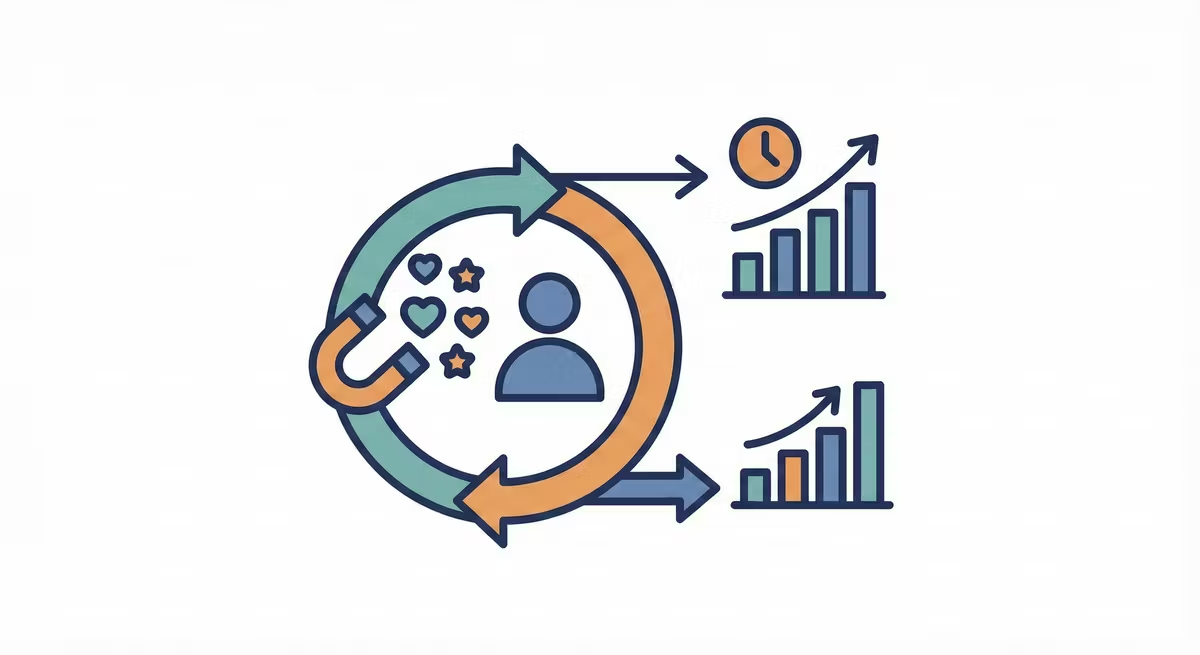
Retention Marketing refers to the activities and strategies designed to maintain relationships with existing customers after the initial purchase. While "Acquisition" focuses on filling the funnel, Retention focuses on plugging the leaks. The primary objective is to drive repeat purchases, increase frequency, and foster brand loyalty, thereby increasing the profitability of the customer base. In mature business models, retention is often prioritized over acquisition because it is significantly more cost-effective.
Retention is mathematically defined by the Customer Retention Rate (CRR).
The Formula: Retention Rate = ((Customers at End of Period - New Customers Acquired) / Customers at Start of Period) * 100
The Churn Inverse: Retention is the mathematical inverse of Churn. Churn Rate = 1 - Retention Rate
The Profitability Multiplier: The economic value of retention is modeled through Customer Lifetime Value (LTV). LTV = (Average Order Value) x (Purchase Frequency) x (Average Customer Lifespan)
A 5% increase in retention can mathematically yield a 25–95% increase in profit because the Customer Acquisition Cost (CAC) for these repeat sales is effectively zero.
The Real Scoop
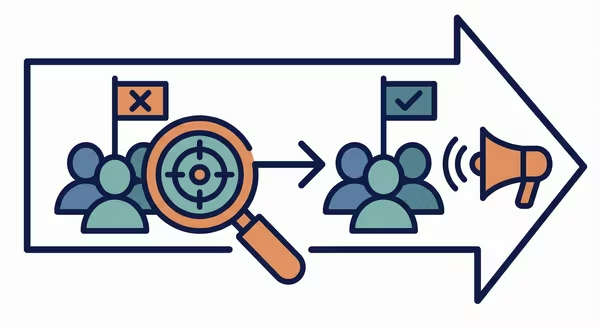
In 2026 the "Growth at All Costs" era is over; the "Profitability" era is here. The reality is that many brands spend millions through quick acquisition tactics while losing customers out of the bottom of the funnel (Churn) just as fast. Modern retention is not just "sending a newsletter." It is Predictive Modeling. Smart brands use First Party Data to identify "At-Risk" users, those who haven't logged in for 28 days and automatically trigger a "Win-Back" campaign (e.g., a 10% discount code) before the user churns. If you wait until they are gone, it is too late.
Watch Outs
- Discount Addiction: Relying on discounts to retain customers trains them to never pay full price again. A healthy retention strategy relies on value (early access, exclusive content) and not just price.
- The Zombie Database: A database of 1 million emails is worthless if only 5% open them. Inactive users hurt your deliverability reputation. You must periodically scrub your list by deleting users who haven't engaged in 12 month to protect your sender score.
- Silent Churn: In non-subscription businesses (like retail), churn is silent. Customers don't cancel; they just stop coming. You need strict definitions of what it means to be "Lapsed" (e.g., No purchase in 90 days) to measure this accurately.