Boardroom Definition
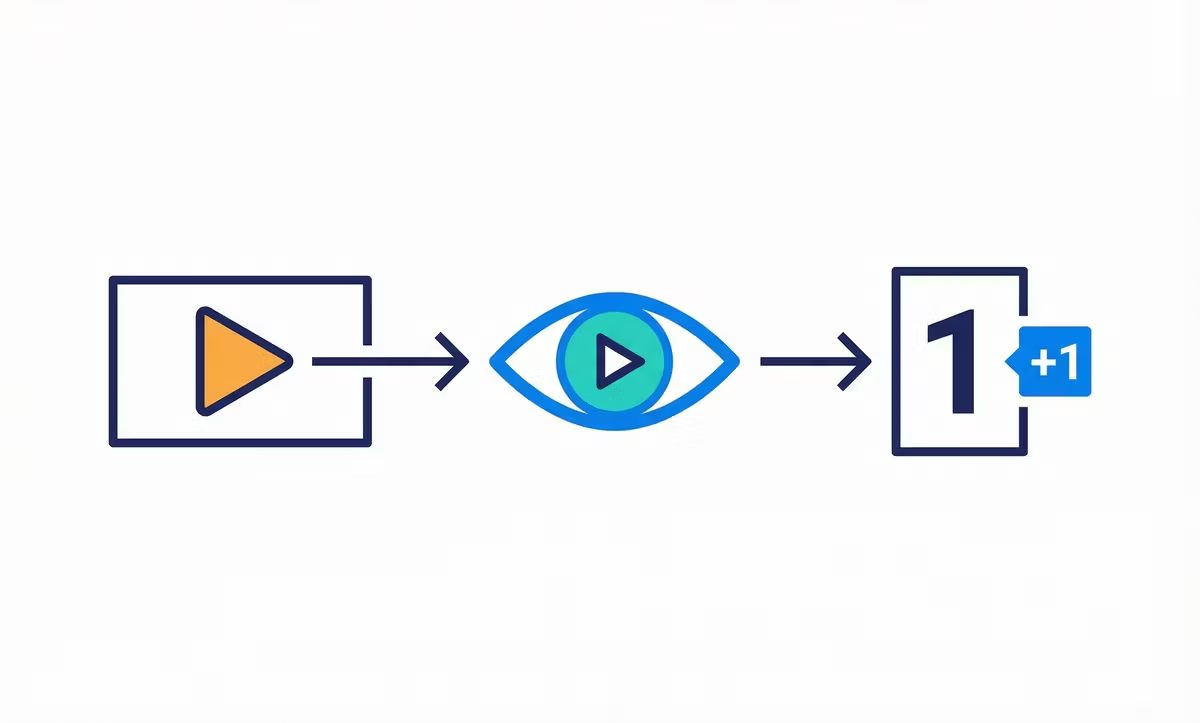
A "View" is a performance metric indicating that a video advertisement has been played for a pre-determined length of time or completed. Unlike an impression (which counts the file loading), a View implies a verified level of user endurance or intent. It is the primary currency for "TrueView" or Cost-Per-View (CPV) buying models, ensuring advertisers only pay for users who actually watch the content.
While a "View" is a raw integer count, it is the denominator in the Cost Per View (CPV) efficiency calculation.
- Formula: Total Cost / Total Views = CPV.
- The "Viewability" Filter: A View is essentially an impression that has passed a time-based filter.
- Logic: Impression + Time Threshold = View.
- Threshold Variance: The variable for "Time" changes by platform (e.g., 30 seconds for YouTube, 3 seconds for Meta).
The Real Scoop
The term "View" is arguably the most fragmented definition in digital media. In 2026, a "View" is not a standard unit of measurement like a meter or a liter; it is a platform-specific metric.
A view on YouTube (typically counting at 10-30 seconds or completion) represents a deep engagement, often requiring the user to actively choose not to skip. In contrast, a view on social feeds (often 2 or 3 seconds) can be triggered passively as a user scrolls past an auto-playing video. Therefore, 1,000 views on YouTube is arguably "heavier" value than 1,000 views on a social feed. While common, some experienced strategists do not aggregate "Total Views" across these platforms because they are adding apples to oranges.
Watch Outs
- Auto-Play vs. Click-to-Play: Be wary of high view counts from "Outstream" or "In-Read" video players. These often auto-play without sound as the user scrolls down an article. While technically counted as a "View" by the platform, the user may not have absorbed any information.
- The "3-Second" Fallacy: Many platforms count a view at 3 seconds. Human attention spans are short, but 3 seconds is barely enough time to recognize a brand logo. Optimizing for the cheapest "3-Second View" often optimizes for low-quality traffic.
- Muted Views: A significant portion of social video views occur with the sound off. If your video relies on voiceover to convey the value proposition, a "View" may be a false positive for communication.
External Resources
- Media Rating Council (MRC): Standards for video ad measurement.
- Google Ads Support: Definitions of "TrueView" and engagement.
- Meta Business Help Center: Explanations of 2-second continuous vs. ThruPlay views.