Boardroom Definition
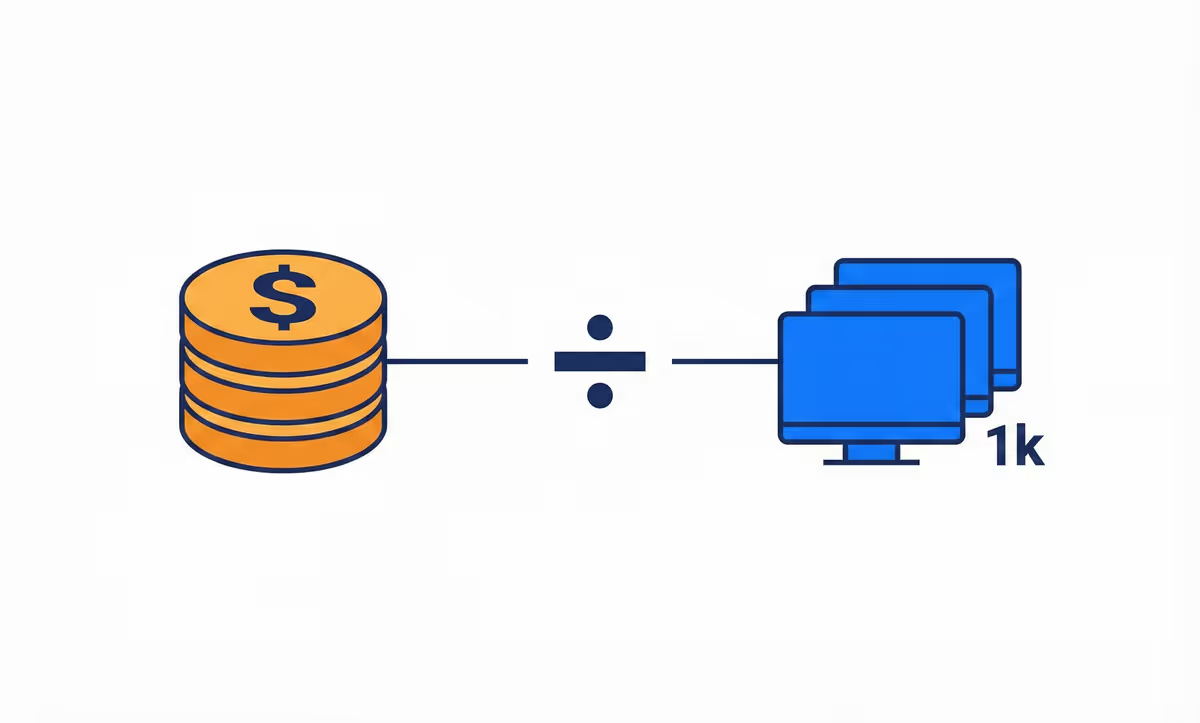
CPM (Cost Per Thousand) is the standard metric used to price and purchase advertising inventory, quantifying the cost required for an advertisement to be loaded 1,000 times. It serves as a baseline efficiency metric, allowing advertisers to normalize and effectively compare ad rates across disparate media channels, platforms, and formats.
The CPM calculation determines the efficiency of media spend relative to volume. Formula: (Cost / Impressions) x 1,000.
- Variable Definitions:
- Cost: The total media spend for the specific placement.
- Impressions: The gross number of times the ad is served.
- Reverse Calculation (Budgeting): To determine the maximum bid ceiling a budget can support: Budget / (Goal Impressions / 1,000).
The Real Scoop
While CPM is the industry standard for pricing, a "good" CPM is strictly relative to the format and audience. In 2026, a low CPM is often a red flag rather than a victory. A $3.00 CPM on an open exchange likely indicates low-viewability display inventory or potential bot traffic, whereas a $45.00 CPM on Connected TV (CTV) reflects high-engagement, non-skippable inventory.
Media buyers must distinguish between CPM and eCPM (effective CPM). CPM typically refers to the cost of a single line item or specific placement. eCPM effectively blends various media types and buying models (like CPC or CPA) into a single efficiency metric, representing the actual price paid for every 1,000 impressions realized across the entire campaign.
Watch Outs
- The Race to the Bottom: Optimizing solely for the lowest CPM often leads to purchasing low-quality inventory on Made-for-Advertising (MFA) sites or non-viewable placements.
- Hidden Fees: Standard calculators often ignore agency margins or tech fees. If calculating a client-facing CPM, you must add these fees (e.g., 15%) to the media cost before running the calculation to avoid "Net" vs. "Gross" confusion.
- Pro-tip: Bookmark our dedicated Gross vs Net Calculator to avoid this common pitfall.
- Currency Traps: When planning global campaigns, ensure all line items are converted to a single currency before comparing or averaging CPMs to avoid incorrect financial modeling.