Boardroom Definition
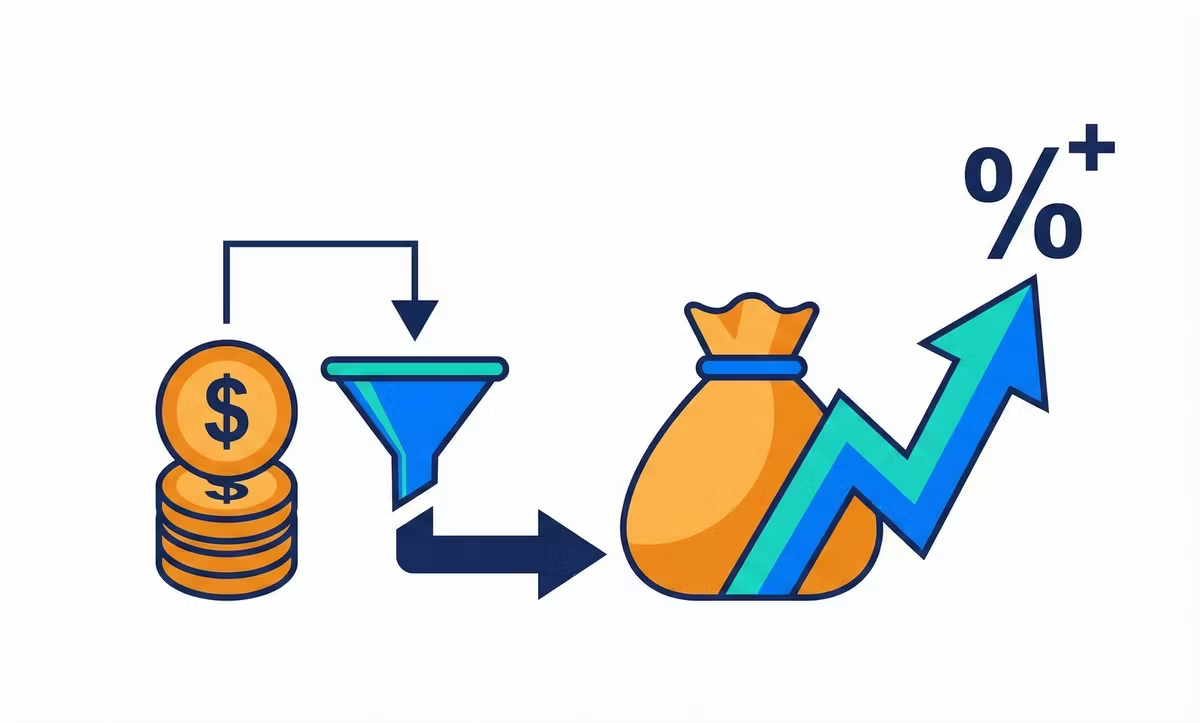
ROAS (Return on Ad Spend) is a quantitative metric used to evaluate the effectiveness of a digital advertising campaign. It measures the amount of revenue earned for every dollar spent on advertising. Unlike ROI (Return on Investment), which accounts for overall profitability including operating expenses and cost of goods sold, ROAS is strictly a measure of media efficiency.
The ROAS calculation isolates the revenue multiplier of the media budget.
- Formula: Total Conversion Value / Total Media Cost.
- Representation: It is typically expressed as a ratio (e.g., $5.00) or a percentage (e.g., 500%).
- Example:
- Total Revenue Generated: $50,000
- Total Ad Spend: $10,000
- Calculation: 50,000 / 10,000 = 5.0 ROAS (or 5 earned for every 1 spent).
The Real Scoop
ROAS is often treated as the "Holy Grail" of performance marketing, but it is dangerously easy to manipulate. In 2026, a high ROAS does not always equal business growth.
If you optimize strictly for ROAS, algorithms will naturally shift your budget toward "low-hanging fruit"—primarily Branded Search (people already looking for you) and Retargeting (people who already visited your site). This inflates your efficiency metrics but starves your "Prospecting" efforts, which drive net-new customers. A 2.0 ROAS on a cold prospecting campaign is often more valuable to long-term growth than a 15.0 ROAS on a branded keyword.
Watch Outs
- Attribution Theft: Ad platforms (e.g., Meta, Google) often claim credit for the same conversion. If Facebook claims a sale (View-Through) and Google claims the same sale (Click-Through), your "Platform ROAS" will look double your actual "Cash Register ROAS."
- Profitability Blindness: You can have a positive ROAS and still lose money. If your profit margin on a product is 20%, you need a ROAS of 5.0 just to break even. A ROAS of 3.0 would technically be a loss, despite generating revenue.
- The Lookback Window: Be wary of vendors extending their attribution window (e.g., 30-day view-through) to artificially inflate their reported ROAS.