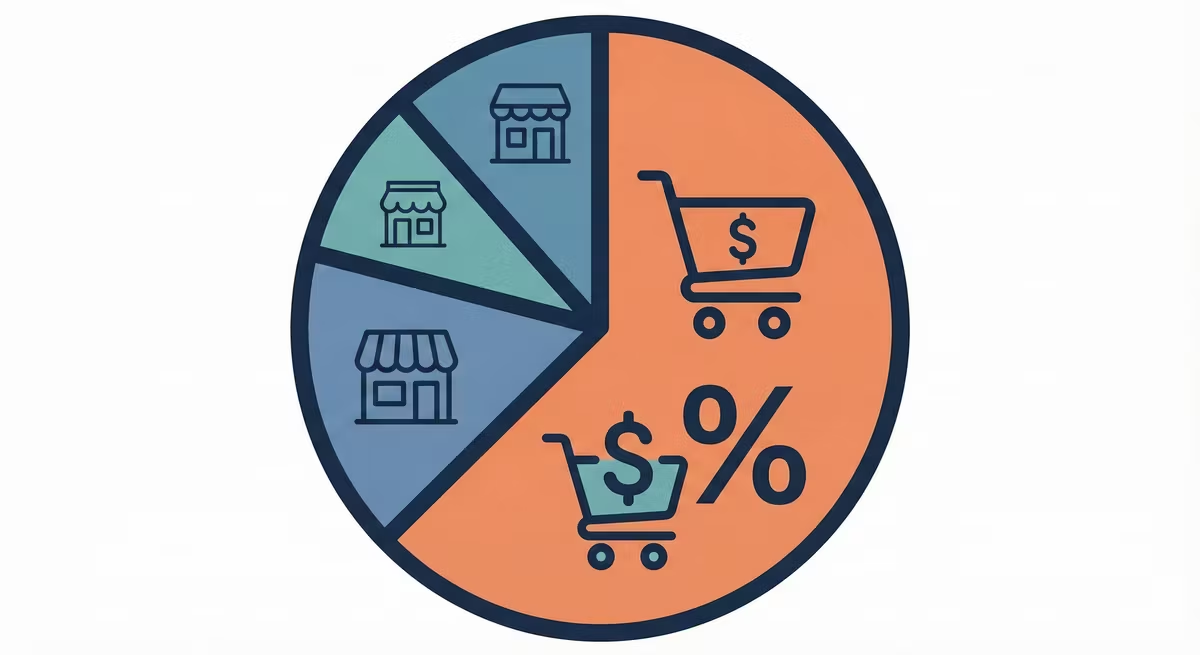
Boardroom Definition
Share of Market (SOM) is the primary indicator of a company's competitiveness and structural strength. It represents the portion of the total available market revenue (or unit volume) that a specific brand captures. Unlike Share of Voice (which measures visibility), Share of Market measures actual commercial dominance. It is the ultimate scorecard for business strategy, often used by investors to judge the viability and "moat" of an organization.
SOM is calculated as a direct ratio of performance against the category total.
The Revenue Formula: SOM = (Brand Revenue / Total Market Revenue) * 100
The Relative Market Share Formula: To understand dominance, analysts often use "Relative Market Share" (a key component of the BCG Matrix), which compares a brand against its largest competitor rather than the whole market.
Relative Share = Brand’s Market Share / Largest Competitor’s Market Share
- > 1.0: You are the market leader.
- < 1.0: You are a challenger or follower.
The Real Scoop
In 2026, the obsession with "Growth at all costs" has largely been replaced by "Profitable Share." Smart strategists look at Share of Profit Pool rather than just Share of Market. In the smartphone industry, for example, a brand might have only 20% of the unit volume (SOM) but capture 85% of the entire industry's profit. The goal is not just to be the biggest; it is to be the one extracting the most value from the sector.
Watch Outs
- The Denominator Trap: The easiest way to manipulate SOM is to redefine the market. If you define your market as "Luxury Electric SUVs in Miami," you might have a 60% share. If you define it as "Global Automotive," you have 0.01%. Always scrutinize the "Category Definition" in any report.
- Anti-Trust Triggers: In 2026 regulatory environments, having too much market share (often >50%) invites government scrutiny and potential breakup litigation. Dominance is a liability if it stifles competition.
- Inertia: High market share can breed complacency. Market leaders often fail to innovate because they are protecting their existing revenue streams, leaving them vulnerable to agile disruptors (The Innovator’s Dilemma).