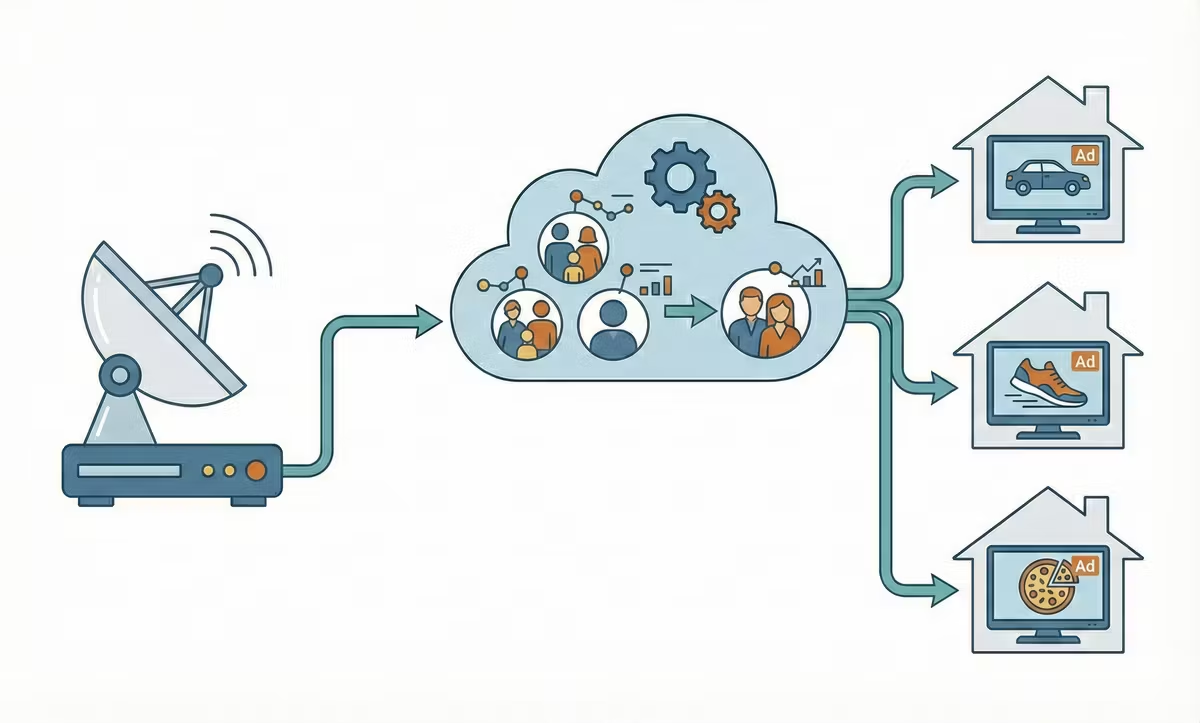
Boardroom Definition
Addressable TV is a method of buying television advertising that moves beyond standard demographics (e.g., Age/Gender) to target specific households based on first-party or third-party data. By leveraging data from set-top boxes (cable/satellite) or IP-enabled devices, advertisers can deliver a relevant message to a specific home—meaning a neighbor watching the same live sporting event may see a completely different commercial.
The financial argument for Addressable TV relies on the Effective CPM (eCPM) of the target audience versus the total audience.
While the raw CPM of Addressable TV is significantly higher than standard Linear TV, the Cost Per Target Audience (CPTA) is often lower because "waste" impressions are eliminated.
Formula: Waste Reduction Efficiency
- Linear Scenario: $10 CPM × 1,000,000 Viewers = $10,000 Total Cost.
- If only 10% are your target, you paid $100 per target prospect.
- Addressable Scenario: $40 CPM × 100,000 Qualified Viewers = $4,000 Total Cost.
- You reached 100% of your target, paying $40 per target prospect.
The Real Scoop
Addressable TV is the "Holy Grail" compromise between the massive reach of traditional broadcasting and the sniper-like precision of digital marketing. In 2026, it is no longer experimental; it is a standard component of sophisticated media plans.
The "Insider" reality is that Addressable TV is primarily a Cable and Satellite play (Comcast, DirecTV, Dish). It utilizes the specific 2 minutes per hour of ad inventory that local cable providers are allotted to sell (the "local avails"). This means you generally cannot buy a national Addressable spot during the Super Bowl on the main network feed; you are buying the local breaks that slide into the feed. It allows niche brands (e.g., B2B software, luxury auto) to play on the big screen without blowing their budget on irrelevant viewers.
Watch Outs
- Inventory Scarcity: Because Addressable inventory is often limited to those specific "local break" minutes, scaling a massive campaign quickly can be difficult compared to a national linear TV buy.
- Creative Fatigue: If you target a small segment (e.g., "In-Market for Minivan") with high frequency, they will see the same ad repeatedly. Strict frequency capping is required to prevent brand annoyance.
- Data Matching Loss: Just like digital pixels, matching a CRM list (email addresses) to a physical household set-top box is not 100% accurate. Expect a "match rate" drop-off of 30-50% when onboarding first-party data.