Boardroom Definition
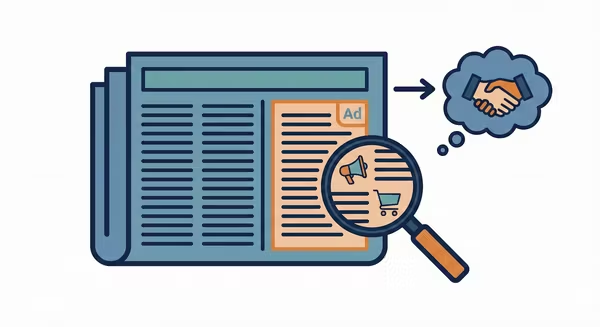
Native Advertising is a paid media execution designed to blend seamlessly with the surrounding editorial content. Unlike traditional display ads (banners) which are visually distinct interruptions, native ads adopt the look and feel of the publisher’s organic content—such as a "Sponsored Article" on a news site or a "Promoted Tweet" in a social feed. The objective is to combat "banner blindness" by offering content that users choose to engage with, rather than content that is forced upon them.
Because Native Advertising mimics editorial content, the primary efficiency metric often shifts deeper than the click, focusing on consumption.
Industry benchmarks suggest Native ads often achieve CTRs 5x–8x higher than standard display banners because they reside in the user's natural reading path (the "feed") rather than the periphery (the "rail").
The Real Scoop
In 2026, Native Advertising is the dominant format of the mobile web. In fact Social Media itself is entirely Native. You cannot run a standard 300x250 banner on Instagram; you must run a Native Image or Video. Outside of social, "Programmatic Native" has commoditized what used to be bespoke "Advertorials." Platforms like Taboola and Outbrain allow advertisers to scale "Recommended for You" widgets across thousands of premium publisher sites.
However, the best Native Advertising isn't just a disguised ad; it is legitimate storytelling. The most effective campaigns offer genuine value, either entertainment or information before pitching the product. If the user clicks a "Sponsored Story" and lands on a hard-sell product page, they may bounce immediately whereas if they land on a helpful blog post, they may convert.
Watch Outs
- The "Clickbait" Stigma: The lower tier of Native (content recommendation widgets) is infamous for "chumbox" aesthetics (e.g., You won't believe what this celebrity looks like now!). Associating a premium brand with low-quality native widgets can severely damage brand equity.
- FTC Disclosure: Deception is illegal. Native ads must be clearly labeled as "Sponsored," "Promoted," or "Ad." Hiding these disclosures to trick users into clicking not only violates Federal Trade Commission (FTC) guidelines but also erodes consumer trust.
- Creative Fatigue: Because Native ads sit in the content feed, users notice and get tired of them faster than side-rail banners. High-frequency native campaigns require a constant rotation of fresh imagery and headlines.