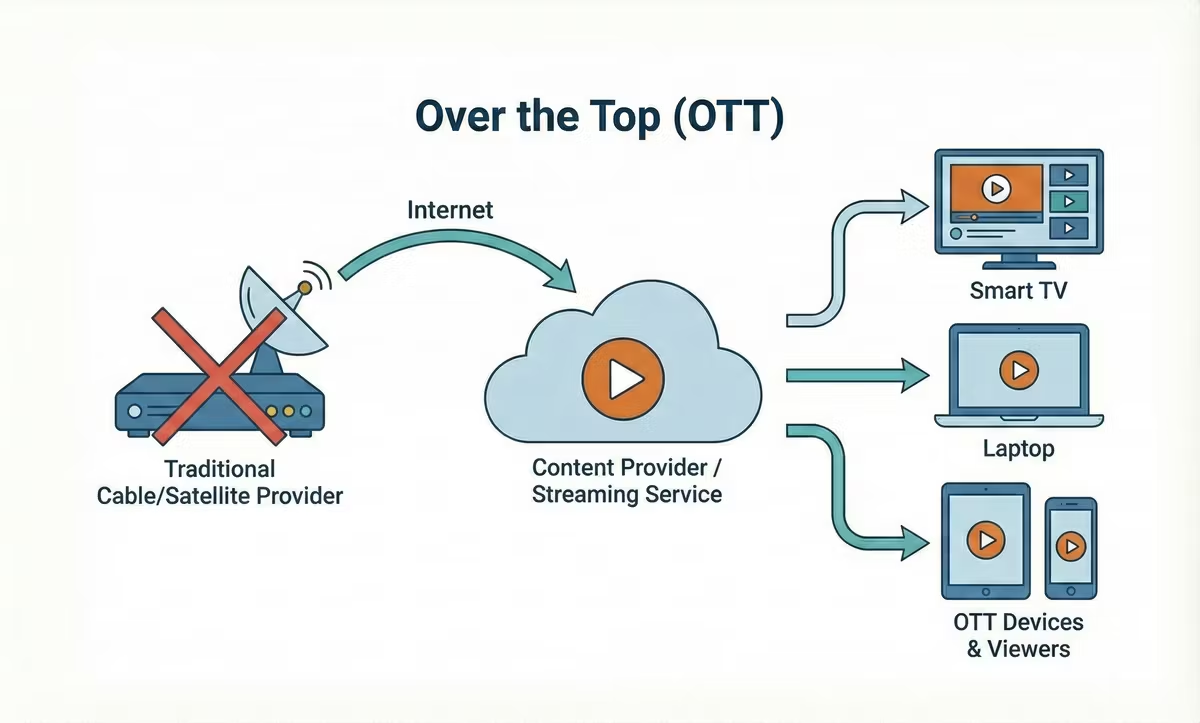
Boardroom Definition
OTT (Over-The-Top) refers to the delivery mechanism of film and television content via a high-speed internet connection rather than a cable box or satellite dish. While often used interchangeably with Connected TV (CTV), OTT is the broader category encompassing the stream itself, regardless of the device used to consume it (e.g., mobile phone, tablet, laptop, or smart TV). It democratizes distribution, allowing content owners to sell directly to consumers.
OTT performance is rigorously measured by VCR (Video Completion Rate), which validates if the user actually watched the content delivered.
VCR = (Completed Views / Total Impressions) * 100
In programmatic buying, planners also calculate the QCPM (Quality CPM) to normalize the cost based on viewability and completion.
QCPM = CPM / (Viewability Rate * Completion Rate)
- Example: A $20 CPM might look cheaper than a $30 CPM.
- But if the $20 ad has only 50% completion, its effective cost (QCPM) is $40.
- If the $30 ad has 90% completion, its effective cost is $33.33.
The Real Scoop
In 2026, the term "OTT" is technically accurate but strategically dangerous if misused. The "Insider" nuance lies in the device distinction: OTT is the Pipe; CTV is the Glass.
If you buy "OTT" inventory without strict device targeting, you are likely buying video ads serving on mobile phones and tablets and not just the "Living Room" TV experience. This is significantly less impactful and should be significantly cheaper than Connected TV.
Savvy buyers treat OTT as the umbrella term but specify "CTV Only" in their Demand Side Platform (DSP) settings when they want the big screen impact. Do not pay "Living Room" prices for a "Bathroom" mobile experience.
Watch Outs
- The "Mobile" Mix: As noted, buying broad "OTT" may result in a large swath of your impressions running on small mobile screens.
- Pro-tip: Ensure your deal IDs specify "Big Screen" or "TV Device" if that is your goal.
- Ad Fraud (Server-Side Injection): Because OTT ads are often stitched into the content stream on the server side (SSAI), traditional viewability trackers (like Moat or IAS) sometimes struggle to verify if a human actually saw the ad. Work only with certified, premium publishers.
- Frequency Avalanches: Without a Universal ID solution, you may bombard the same user on their phone, then their laptop, then their TV, causing brand resentment due to excessive frequency.