Boardroom Definition
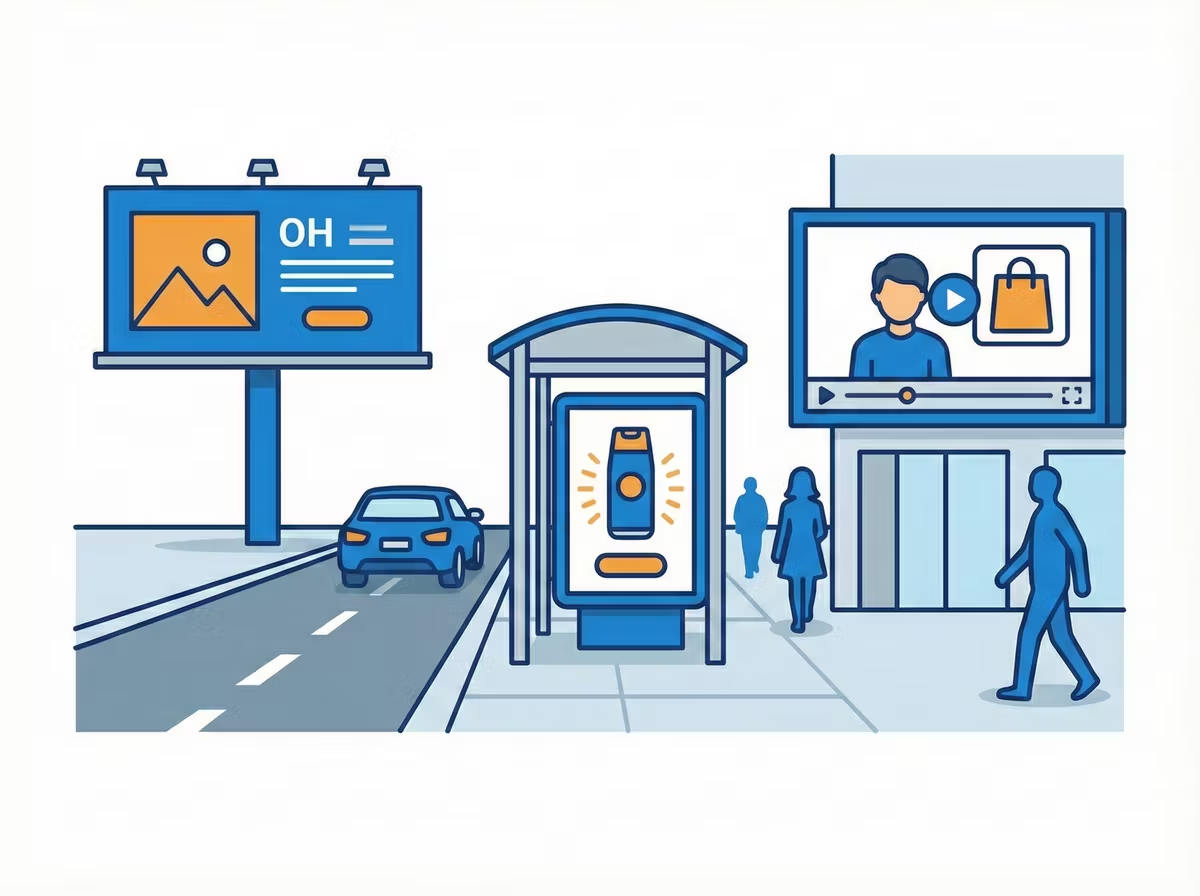
Out of Home (OOH) advertising encompasses all media placements found in public environments, including billboards, street furniture (bus shelters, benches), transit (buses, trains, airports), and place-based networks (gyms, malls, cinemas). It is a high-impact broadcast channel primarily used for building broad brand awareness and geographic dominance within a specific market.
The currency of OOH measurement is Geopath Impressions, but the legacy metric often referenced is DEC (Daily Effective Circulation).
Modern planning relies on Share of Voice (SOV) or Loop Frequency for Digital Out of Home (DOOH) screens. Since digital billboards rotate multiple advertisers (typically 8 slots of 8 seconds each in a 64-second loop), your visibility is fractional.
Spot Share = (Your Spot Duration / Total Loop Duration) * 100
- Example: 8 seconds / 64 seconds = 12.5% SOV.
- Implication: A viewer driving past at 60mph has only a 12.5% chance of seeing your ad if they look at the board at that exact moment.
The Real Scoop
In 2026, OOH has undergone a "Programmatic Revolution" (pDOOH). It is no longer just about buying "wood and vinyl" for 4 weeks. Digital screens can now be bought like banner ads, even triggered by data signals such as weather (e.g., "only run the iced coffee ad when it is above 80°F") or time of day.
The "Insider" reality is that OOH is the last unskippable medium. You cannot install an ad-blocker on a highway billboard, and you cannot "scroll past" a subway platform poster. It offers legitimate, high-frequency reinforcement that validates the digital ads a user sees on their phone. If they see you on Instagram and on their commute, the brand feels ubiquitous.
Watch Outs
- The "Flicker" Effect: On digital billboards, short slot times (6-8 seconds) mean your message disappears quickly. Complex copy or URLs are useless. If it takes more than 3 seconds to read, it fails.
- Measurement Opacity: Unlike digital click-throughs, attributing a website visit to a billboard requires "Geofence Attribution" studies, which often have high margins of error. Be wary of vendors promising exact "Return on Ad Spend" (ROAS) for OOH.
- Traffic Speed: A board on a highway with gridlock traffic has high "Dwell Time" (high value). The same board on a free-flowing highway has low dwell time. Impressions alone do not account for the speed of the viewer.