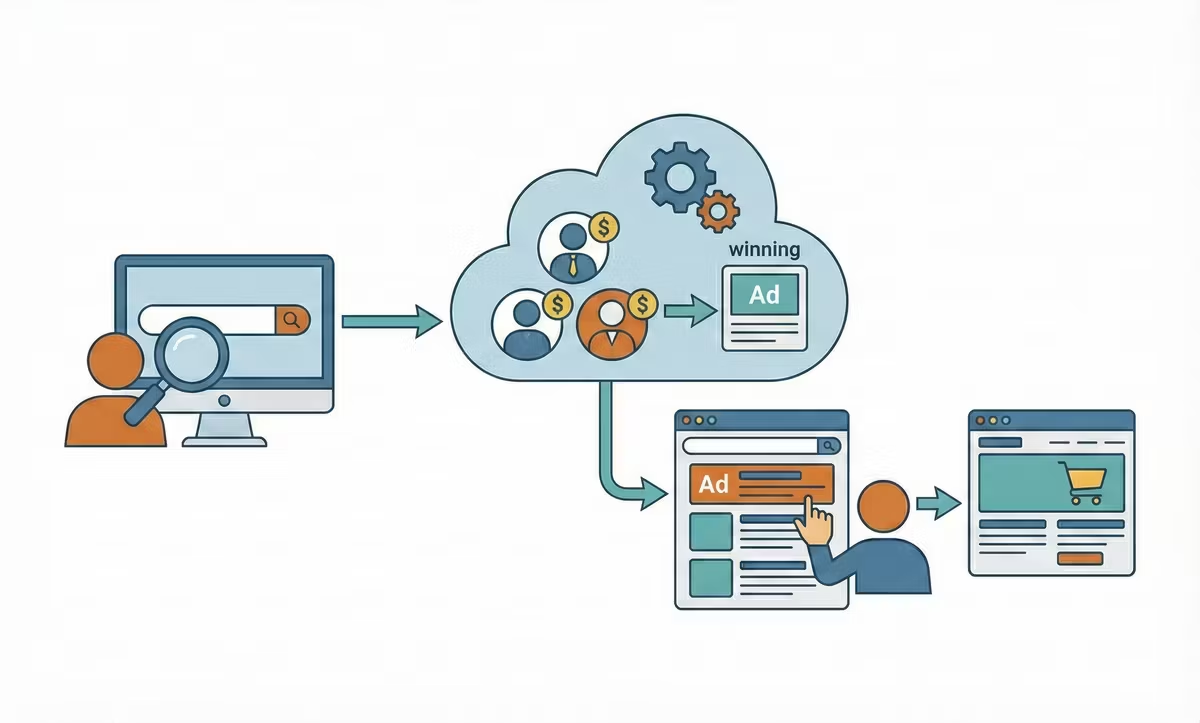
Boardroom Definition
Search Advertising (often referred to as SEM or Paid Search) is a digital marketing strategy where advertisers bid to display Headline text or shopping ads within the results of a search engine query (SERP). Unlike display or social media advertising, which disrupts a user's activity to generate interest, search advertising captures users who have already self-identified a need or intent. It is widely regarded as the most efficient "bottom-of-funnel" conversion channel.
Advanced Math and Science Application
The placement of a search ad is not determined by budget alone, but by Ad Rank. The auction mechanism rewards relevance, not just deep pockets.
Ad Rank Formula = Maximum Bid * Quality Score
- Maximum Bid: The highest amount you are willing to pay for a click.
- Quality Score (1-10): A metric calculated by the engine based on Expected Click-Through Rate (CTR), Ad Relevance, and Landing Page Experience.
Because of this variable, an advertiser with a high Quality Score can pay less for a higher position than a competitor with a lower score.
Actual CPC Formula (Second-Price Auction): Your Price = (Ad Rank of Person Below You / Your Quality Score) + $0.01
The Real Scoop
In 2026, the definition of "Search" has expanded aggressively beyond the "10 blue links" of Google. It now encompasses Retail Media (Amazon, Walmart search results) and AI-Assisted Discovery (ads embedded in AI chat responses).
The "Insider" reality is that the era of granular "Exact Match" keyword control is effectively over. Platforms now push "Broad Match" combined with "Smart Bidding" (AI), meaning you are bidding on the intent of the user, not just the specific word they typed. While this increases reach, it removes the manual levers buyers used to pull.
Additionally, Branded Search (bidding on your own company name) is often viewed as a "Brand Tax." You are essentially paying to protect your real estate from competitors who would otherwise conquest your brand name at the top of the page.
Watch Outs
- Broad Match Bleed: If you rely solely on the platform's default settings (Broad Match), your ads will show for loosely related queries that drain budget (e.g., selling "luxury watches" but appearing for "cheap watch repair"). Aggressive "Negative Keyword" lists are mandatory.
- Cannibalization: Bidding heavily on terms where you already rank #1 organically (SEO) can be wasteful. Test pausing branded ads to see if organic clicks absorb the volume or if traffic is lost.
- The "PMax" Black Box: Performance Max campaigns automate search inventory but offer limited visibility into where the budget is actually going. Demand transparency reports to ensure you aren't paying for junk inventory masked as search.